
Choosing a web design agency in Canada is one of the most consequential decisions a business owner can make for their digital presence. The right agency becomes a long-term partner. The wrong one leaves you with a website that looks dated, loads slowly, and fails to convert visitors into clients.
This guide walks you through what to look for, what to ask, and what red flags to avoid — so you make the decision with confidence.
Why the Right Agency Changes Everything
Your website is often the first impression a potential client has of your business. A well-built site communicates credibility, makes it easy for visitors to take action, and works on every device. A poorly built one does the opposite — and fixing it later costs more than getting it right the first time.
Canadian business owners face a specific challenge: there are thousands of agencies, freelancers, and offshore services competing for the same budget. Price alone is a poor guide. What matters is finding a team that understands your goals, communicates clearly, and delivers work that actually performs.
Define What You Need Before You Start Searching
Before you contact a single agency, get clear on your own requirements:
- Your goals: Are you looking to generate leads, sell products, build credibility, or all three?
- Your timeline: Do you have a launch date tied to a campaign or event?
- Your budget: Know your range before the conversation starts. It protects you and helps agencies give you honest proposals.
- Your ongoing needs: Will you need SEO, content updates, or ongoing maintenance after launch?
Agencies can serve you far better when you arrive with clear answers to these questions.
Look at Their Portfolio — With Intention
Every agency will show you their best work. Your job is to look beyond the visual polish.
Ask yourself: Do they have experience in your industry or with businesses of your size? A portfolio full of e-commerce brands tells you little about their ability to serve a healthcare clinic or a nonprofit organization.
Ask the agency to show you examples closest to your situation — not their most impressive showpiece. If they've worked with dental practices, nonprofits, or local service businesses in Canada, that experience matters. They already understand your audience, the compliance considerations, and the specific conversion goals that apply to your sector.
Ask About the Process, Not Just the Price
A low quote with no clear process is a warning sign. A higher quote backed by a defined workflow is often the better investment.
When you meet with an agency, ask them to walk you through a typical project from start to finish:
- How do they gather information about your business and audience?
- Who handles design, development, and content — and are those in-house or outsourced?
- How many revision rounds are included, and at what stages?
- What does the approval process look like, and how are you kept informed?
A professional agency answers these questions without hesitation. Vague responses about "being flexible" often mean the process is underdeveloped.
Check Whether They Understand Your Industry
Generic web design knowledge gets you a generic website. Industry-specific experience gets you a site that speaks to your clients in the right way.
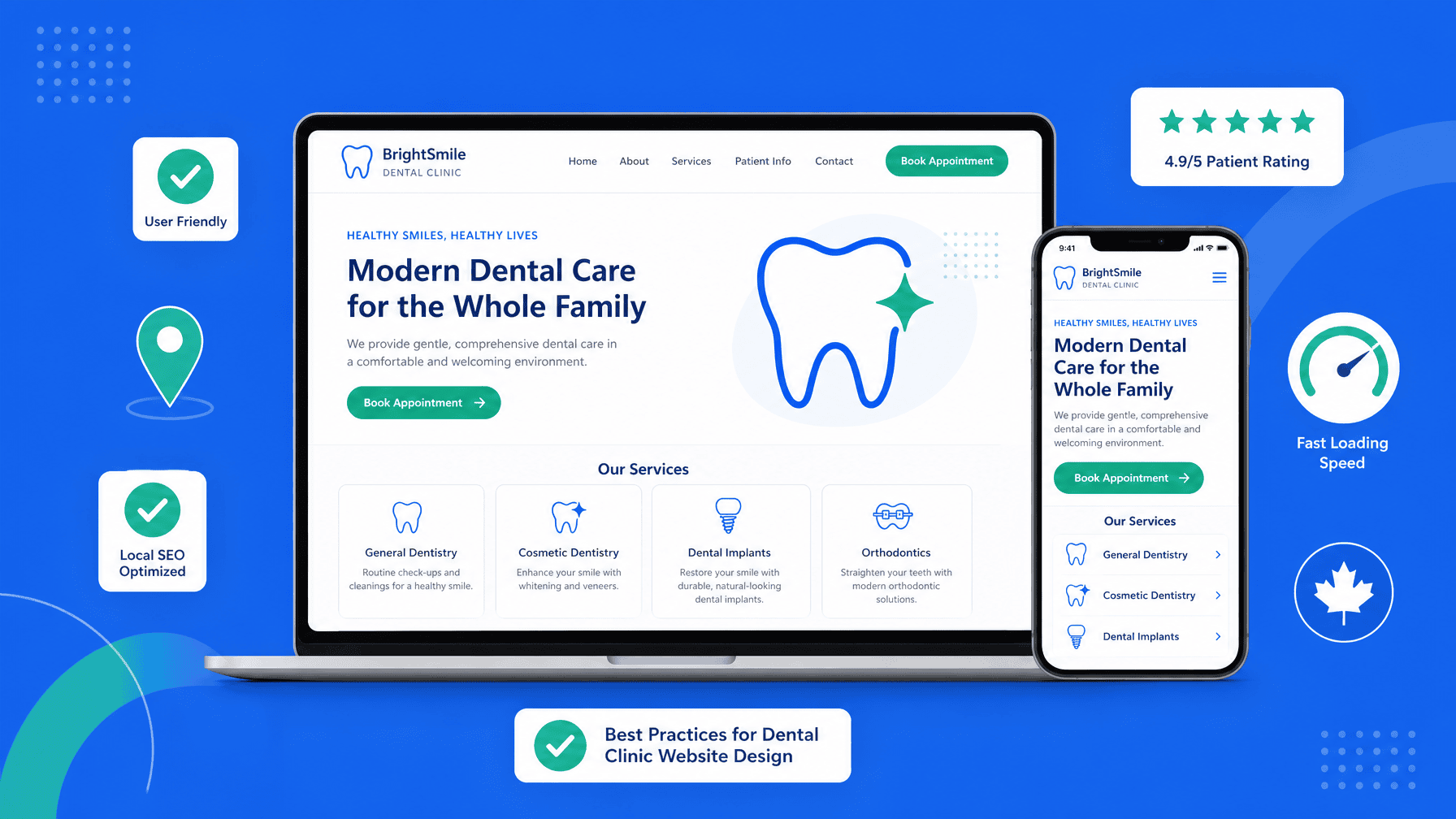
If your business is a dental practice, your website needs to address patient anxiety, highlight procedures clearly, and make booking appointments frictionless. If you run a nonprofit, your site needs to communicate impact, earn donor trust, and meet accessibility standards that allow all Canadians to use it.
Look for agencies that ask intelligent questions about your clients, not just your brand. The difference in output is significant.
Consider Location and Communication Style
Working with a Canadian web design agency means shared time zones, a shared understanding of the Canadian market, and accountability under Canadian business norms. When something needs to be resolved quickly, a local or national agency is reachable during your business hours.
This does not mean offshore agencies can never deliver — but the coordination overhead is real, and so is the cultural gap when it comes to understanding what resonates with a Canadian audience.
Beyond geography, pay attention to how an agency communicates during the sales process. Are they responsive? Do they listen more than they pitch? Do they ask smart questions about your business? The way an agency behaves before you sign a contract is usually how they behave after.
Think Beyond the Launch Date
A website is not a one-time project. Search engine optimization, content updates, accessibility improvements, security patches, and performance monitoring are ongoing. Ask every agency you consider:
- What ongoing support or maintenance packages do they offer?
- Can you update the site yourself, or do you need to go through them for every change?
- Do they offer SEO services after launch?
- What happens if something breaks?
If an agency only talks about the build and goes quiet on everything after launch, factor that into your decision.
Red Flags to Watch For
Some warning signs are worth calling out directly:
- Guaranteed first-page Google rankings: No one can promise this. It is a sign of either dishonesty or inexperience.
- No contract or vague scope: A professional agency uses a clear written agreement that specifies deliverables, timelines, and revision limits.
- No discovery process: If an agency sends you a quote within hours of your first contact, without asking meaningful questions about your business, they are guessing.
- Outdated portfolio: If their own website or their showcase work looks several years behind current web standards, that is what they will build for you.
- Pressure to decide quickly: Legitimate agencies have full project pipelines but do not pressure you into signing.
Questions to Ask Before You Sign
Bring these to every conversation with a prospective agency:
- Can you walk me through a recent project similar to mine, from brief to launch?
- Who will be my primary point of contact throughout the project?
- How do you handle scope changes if new requirements come up?
- What platform will my site be built on, and why?
- Do you build for accessibility (WCAG compliance)?
- What does post-launch support look like, and what does it cost?
- Can I speak with a current or past client?
The answers tell you a great deal — not just about their capabilities, but about whether the working relationship will suit you.
Ready to Find the Right Fit?
Choosing a web design agency in Canada does not have to feel like a gamble. When you know what to look for and the right questions to ask, the right partner becomes clear.
At NativaWeb, we work with Canadian businesses, nonprofits, and healthcare providers to build websites that are professional, accessible, and built to perform. We believe in clear communication, honest pricing, and long-term partnerships — not one-off launches.
Book a free consultation and let us show you what a thoughtful, Canadian-built website can do for your business.